
India is closely monitoring the situation in West Asia and working to ensure the safety of its citizens stranded in the region. Over 52,000 Indians have returned home following the partial opening of airspace.

Funeral prayers were held for Bangladesh's former prime minister Khaleda Zia amid tight security. Millions joined the namaz-e-janaza of Zia, a three-time Prime Minister and political icon of Bangladesh.

External Affairs Minister S Jaishankar affirms India's self-determined and 'unstoppable' rise, emphasising the nation's strategic growth and role in the Indian Ocean region amid evolving global dynamics.

India's handling of the Iran crisis reflects a growing strain between strategic autonomy and geopolitical alignment, observes Ambassador M K Bhadrakumar.

A Delhi court has dismissed the anticipatory bail plea of a senior IPS officer from Mizoram, accused of conducting unauthorised raids, illegal detentions, and demanding money from a foreign national in Delhi.

America's population and its media and its democratic structures seem fine with this, which is why Trump continues as he does, asserts Aakar Patel.

Former External Affairs Minister K Natwar Singh passed away on Saturday night after a prolonged illness, family sources said. He was 93.

Amid escalating tensions, Iranian Deputy Foreign Minister Saeed Khatibzadeh declares Iran's unwavering commitment to a 'heroic nationalist defence' against perceived American and Israeli aggression, vowing to resist what he calls an 'invasion' to the very end.

The Congress party has criticised Prime Minister Narendra Modi's diplomatic efforts following the ceasefire agreement between the US and Iran, facilitated in part by Pakistan. The party claims this development undermines Modi's strategy and exposes his perceived failures in foreign policy.
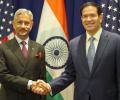
Rubio voiced "appreciation" for New Delhi's continued engagement on bilateral issues, including trade, defence and energy.

Delhi should keep all its options open in what is essentially a transitional period in the geopolitics of energy rather than remain a gatekeeper serving Trump's 'America First', suggests Ambasssador M K Bhadrakumar.

Misri is also likely to brief the parliamentary panel on the recent upswing in India's ties with China following the agreement to resume patrolling at friction points along the Line of Actual Control in eastern Ladakh.

The Indian government informed Parliament that India and the US are engaged in negotiations for a mutually beneficial multi-sectoral bilateral trade agreement. The two countries also cooperate on strategic, economic, and defense matters, managing divergences through high-level dialogues.

He added that opposition parties were assured that their concerns regarding the impact of the West Asia situation on India and the safety of Indian citizens were addressed in detail.

The question is no longer whether the war will expand. It has. The next few days will tell us whether the war stabilises around Hormuz or whether the Strait itself becomes the trigger for a far larger rupture. What to watch for over the next 48 hours is simple: Any move by the US toward direct naval control of the Strait; any credible Iranian attempt to disrupt or mine shipping lanes and, critically, whether energy infrastructure in the Gulf continues to be targeted.If those lines are crossed in tandem, the war will no longer be containable within the region.

Bangladesh's interim government has formally requested India to extradite former Prime Minister Sheikh Hasina after she was sentenced to death by the International Crimes Tribunal for crimes against humanity.
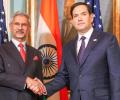
This will be the first face-to-face meeting between Rubio and Jaishankar following President Donald Trump's imposition of an additional 25 per cent tariff on India for Delhi's purchases of Russian oil, taking the total levies imposed on India by the Trump White House to 50 per cent.

The core issues to be settled -- access to Hormuz, Israel's aggression in Lebanon, the question of Iran's nuclear programme, sanctions relief and compensation -- are thorny enough to require weeks of patient negotiation. The most likely outcome of the opening sessions is that both sides take the measure of each other, establish what is and is not negotiable, and return home without having broken anything. That would count as progress.

Punjab Chief Minister Bhagwant Mann has criticized Prime Minister Narendra Modi's foreign visits, drawing disapproval from the Ministry of External Affairs.

The visas were granted to the five Iranian players after US President Donald Trump spoke to Australian Prime Minister Anthony Albanese following reports that the players had requested asylum.

The Dhurandhar movies will undoubtedly shape the minds of the audience much more than news reports, court investigations, books and documentaries. But it is worth remembering that Pakistan's irridentist claims against India's national security have succeeded due to strategic planning, diplomacy, and the unsung heroines and heroes across government agencies, not due to a single maverick leader, points out Shweta Desai.But it is worth to remember that Pakistan's irredentist claims against India's national security have succeeded due to strategic planning, diplomacy, and the unsung heroines and heroes across government agencies -- not a single maverick, points out Shweta Desai.
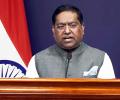
India on Wednesday categorically rejected Nepal's objection to a decision by New Delhi and Beijing to resume border trade through Lipulekh pass, saying Kathmandu's claims on the territory are not justified.

Lavrov's comments came two days after Russia accused the US of attempting to prevent India and other countries from buying Russian oil, saying Washington was using a wide range of 'coercive' measures, including tariffs, sanctions and direct prohibitions.

This weekend, Donald Trump has begun to say the quiet part out loud -- that he wants to take control of Iran's oil, a formulation more in line with his robber-baron style of international relations.
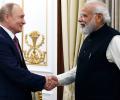
The US House Foreign Affairs Committee Democrats stated that imposing tariffs on India will not deter Russian President Vladimir Putin or address Russia's invasion of Ukraine.

A Delhi court has requested further information from the investigating officer in the child custody case involving Viktoriaa Basu, a Russian woman accused of illegally leaving India with her child.

Haryana's Chief Minister Nayab Singh Saini announced a plan to equip police with body cameras, establish new women and cybercrime police stations, and form an Anti-Terrorist Squad as part of a broader effort to modernise the state's police force.
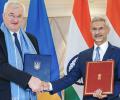
External Affairs Minister S Jaishankar reiterated India's support for an early end to the conflict in Ukraine after a conversation with his Ukrainian counterpart, Andrii Sybiha. The discussion follows recent diplomatic engagements, including meetings between Prime Minister Modi and both President Putin and President Zelenskyy.

Punjab Chief Minister Bhagwant Mann has accused the central government of providing special treatment to gangster Lawrence Bishnoi, who is accused in the Sidhu Moosewala murder case. Mann's criticism comes after Union Minister Amit Shah spoke about gang activities in Punjab.

Earlier in the day, the ministry of external affairs "strongly advised" Indians to avoid travel to Iran until further notice, amid rising tensions and protests in the Islamic Republic.

The Cabinet Committee on Security (CCS) has reviewed the evolving situation in West Asia, directing departments to assist Indian nationals affected by recent developments and emphasizing the need for dialogue and diplomacy.
Lavrov said that the US has set itself the objective of 'achieving economic domination', adding further to it that Americans want to control the routes to leading countries to provide its energy sources to them.
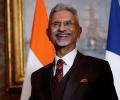
The US Department of State highlighted a mission-defining challenge during External Affairs Minister S Jaishankar's visit in November amid the US government shutdown, detailing the security measures taken to ensure his protection.
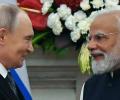
United States representative Sydney Kamlager-Dove while talking about the famous car selfie of Prime Minister Narendra Modi with Russian President Vladimir Putin said that it spoke a thousand words.
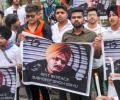
Punjab Chief Minister Bhagwant Mann has accused the central government of providing 'VIP treatment' to gangster Lawrence Bishnoi, criticising perceived double standards in dealing with crime.

The Congress party has accused the government of scheduling a 'special session' to pass bills related to women's quota and delimitation with the intention of gaining political advantage in the upcoming West Bengal and Tamil Nadu elections, calling it a violation of the model code of conduct.

'The West Asia or the Gulf crisis has shown that what we develop as national infrastructure when things are not as bad as they could be, we forget to plan for adversities.'
United States Charge d'Affaires Natalie Baker on Wednesday met Deputy Prime Minister and Foreign Minister Ishaq Dar as part of efforts to de-escalate tensions with India following the Pahalgam terror attack on April 22 in which 26 people were killed.

Israel and the United States had a plan. Iran punched back. And now the Gulf is reeling, the world is beginning to feel the pain and, as on date, no one in Washington or Tel Aviv appears willing to admit that the punch has landed, notes Prem Panicker, continuing his must-read blog on the war in the Middle East.

Iran is fighting a different war: Older, slower, and in some ways more dangerous. Iran doesn't need to shoot down an F/A-18. It only needs to make the Strait of Hormuz feel dangerous long enough for insurance markets, shipping companies, and oil futures traders to do the rest. Prem Panicker continues his must-read daily blog on the war in the Middle East.
